Our dogs are living longer. Here's why.
Share
We'd all love a few more years with our dogs, so here's some encouraging news. Research shows that dogs in many parts of the world are living longer than they used to. And while genetics and breed still play a significant role in determining lifespan, there's growing evidence that the way we care for our dogs is making a real difference.
According to a HealthforAnimals report, the average life expectancy of dogs in the United States increased from 10.5 to 11.8 years between 2002 and 2016. In Japan, dogs were living 50% longer than they had in the 1980s.
More recent research from Dogs Trust, involving over half a million UK dogs, found a median lifespan of 12.5 years, although this varies considerably between breeds.
So what's behind the improvement, and what can we do to help our own dogs live longer, healthier lives?
Better veterinary care and disease prevention
Perhaps the biggest change has been the shift towards preventative healthcare. Vaccinations protect against potentially fatal diseases, parasite treatments are more effective and veterinary medicine has made enormous advances.
Regular check-ups also mean conditions such as arthritis, diabetes and heart disease can be identified and managed earlier. Better diagnostic equipment and new treatments are helping dogs stay healthier well into their senior years.
The HealthforAnimals report identifies preventative care as one of the main reasons for increasing canine life expectancy. Treating problems earlier, or preventing them altogether, can make a significant difference.
We understand our dogs better
Our attitude towards dogs has changed enormously over the past few decades. They're increasingly treated as members of the family, and we're paying closer attention to their physical and emotional wellbeing.
Owners are more aware of the importance of regular exercise, mental stimulation, dental care and changes in behaviour that might indicate a health problem. We're also getting better at recognising that older dogs have different needs, whether that's gentler exercise, additional joint support or more frequent veterinary checks. All of these small improvements can add up over a lifetime.
Better diets and healthier weights
What goes into our dogs' bowls matters too, and there's some fascinating research demonstrating just how important diet can be to longevity.
A long-running study involving 48 Labrador Retrievers found that dogs fed to maintain a lean body condition lived, on average, 1.8 years longer than their more generously fed counterparts. They also developed age-related conditions such as osteoarthritis later in life.
The finding highlights the importance of maintaining a healthy weight throughout a dog's life, something that's particularly relevant when we consider how easy it is to be generous with treats. Food quality matters too. A balanced diet provides the building blocks for healthy muscles, bones and organs, while ingredients such as omega-3 fatty acids and fibre can support specific aspects of health.
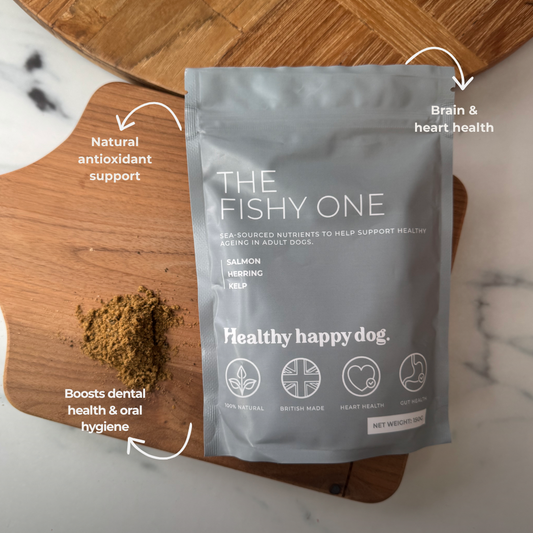
It's one of the reasons we're passionate about whole ingredients at Healthy Happy Dog. Salmon and herring in The Fishy One provide natural omega-3 fatty acids, while pumpkin in The Veggie One supplies fibre to support digestive health. Our blends are designed to complement a dog's everyday diet, providing a simple bowl boost alongside their usual food.
Longer lives bring new challenges
Of course, living longer also means dogs are more likely to experience conditions associated with ageing. Arthritis, cognitive decline, diabetes and other chronic illnesses become increasingly common as dogs get older.
That's why healthy ageing is about more than simply counting birthdays. Maintaining mobility, supporting digestive health, encouraging mental stimulation and adapting care as our dogs age can all help preserve their quality of life.
A slower walk, a little more time sniffing or a change in feeding routine might be all that's needed to make an older dog's day more comfortable. And any persistent changes in behaviour, appetite or mobility are always worth discussing with your vet.
Here's to more good days
There's no magic formula for making our dogs live longer. Breed, genetics and circumstances will always play a part, and even the very best care can't guarantee a particular lifespan.
But the research offers good reason to be optimistic. Better veterinary care, improved diets, healthy weight management and a greater understanding of our dogs' needs are all helping them enjoy longer lives.
And ultimately, that's what we're working towards at Healthy Happy Dog: more good days together.
Try our Healthy Ageing Calculator.