Think twice before hosing your dog down in hot weather
Share
Rufus has not been a happy puppy this week. Not only does he have a sore paw after a vet visit to deal with a grass seed, his beautiful red coat is a liability when it gets this hot, even for a dog that was born in Australia. He is currently stretched out on the coolest patch of kitchen floor he can find and giving me a look that says, "I think we'll skip the zoomies today."
Dogs are often much better at listening to their bodies than we are. The problem is they rely on us to make the important decisions, like when it's safe to go for a walk or how best to help them cool down.
With UK summers becoming hotter and heatwaves arriving more often, it's worth knowing that some of our instincts aren't always the most effective. One of the biggest? Reaching straight for the hose.
How dogs keep themselves cool
Unlike us, dogs don't cool themselves by sweating through their skin. They lose most of their body heat by panting, with a little heat also escaping through their paw pads. That means they can overheat surprisingly quickly, particularly if they're exercising, carrying extra weight, have a thick coat or belong to a flat-faced breed such as a Bulldog, Pug or Boxer.
By the time your dog looks uncomfortable, they're already working hard to regulate their body temperature, so preventing them from overheating in the first place is always better than trying to cool them down afterwards.
Is hosing your dog down the answer?
A blast from the garden hose seems like the obvious solution but it's not always the best way to help. While cool water can certainly help lower body temperature, completely soaking a dog from head to tail isn't necessarily the most effective approach, particularly if they have a thick double coat.
Water can become trapped deep within the coat where there's very little airflow. As that trapped water gradually warms up to your dog's body temperature, it loses much of its cooling effect, leaving your dog's skin damp but not necessarily much cooler.
Instead, focus on the areas where the fur is thinner and blood vessels sit closer to the surface. Cooling your dog's paws, belly and groin with cool (not ice-cold) water allows heat to escape more efficiently. A fan, a light breeze or simply allowing air to circulate around those damp areas will help the cooling process even more.
Avoid using ice-cold water or ice baths. These can cause blood vessels near the skin to constrict, making it harder for heat to escape naturally.
Five simple ways to help your dog stay cool
Keeping your dog comfortable during hot weather doesn't have to be complicated. A few small changes can make a big difference.
Walk earlier or later in the day.
Early mornings and late evenings are usually much cooler than the middle of the afternoon. If the pavement feels too hot for the back of your hand after seven seconds, it's too hot for your dog's paws too. And on really hot days, skip the walks altogether apart from brief toilet trips. Your dog might not be too happy about it but it might keep him alive.
Encourage them to drink more.
Fresh water should always be available, but you can also increase their fluid intake by adding extra water to their meals. Many dogs happily lap up the extra moisture without even noticing.
Make frozen treats.
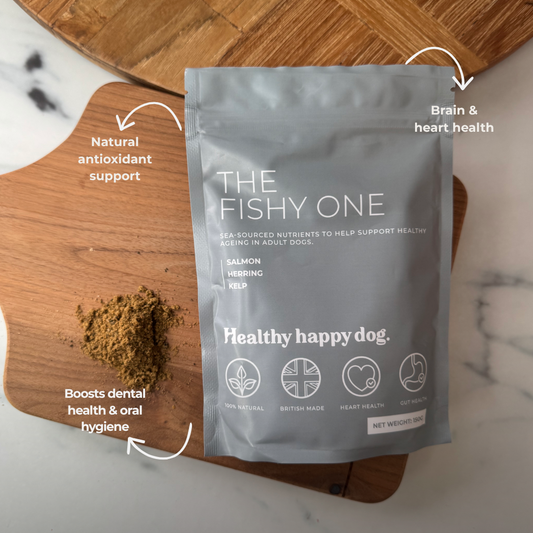
A simple ice cube can become an enjoyable way to cool down. You can even mix one of our Healthy Happy Dog supplements with water and freeze it into small ice cubes or frozen treats. It's an easy way to provide enrichment while helping your dog stay cool and hydrated.
Let them choose the coolest spot.
Dogs are surprisingly good at finding somewhere comfortable. Whether it's cool tiles, a shady patch of grass or a cooling mat, don't be surprised if your dog spends more time resting during a heatwave. That's perfectly normal.
Don't encourage energetic play.
Fetch, long runs and rough games are best saved for cooler parts of the day. Even dogs that seem full of energy can overheat more quickly than you might expect.
Know the signs of heatstroke
Heatstroke is a genuine emergency and can become life-threatening very quickly.
Watch out for:
- Excessive or frantic panting;
- Thick drool;
- Bright red or very pale gums;
- Weakness or wobbliness;
- Vomiting or diarrhoea;
- Confusion or collapse.
If you suspect your dog is suffering from heatstroke, move them somewhere cool, begin cooling them with cool water and contact your vet immediately. Don't wait to see if they improve on their own.
Enjoy summer together safely
Summer is one of the best times of year to enjoy life with your dog. Longer evenings, countryside walks and afternoons in the garden are things we all look forward to.
With a little planning, there's no reason your dog can't enjoy them too. Walk when it's cooler, encourage them to drink plenty of water, help them cool down sensibly and let them take things at their own pace.