Why dogs shed their coats twice a year
Share
As a long-haired, double-coated breed, Rufus is quite the shedder. All our carpets have a slight ginger tinge and we don’t dare look too closely under the sofas. The problem gets noticeably worse in spring and autumn, when his coat changes with the seasons.
For many dogs, that twice-yearly increase in shedding is completely normal. Their coat is changing to suit the months ahead, with older hair falling out as a new seasonal coat grows through.
Why do dogs shed?
Dog hair goes through a natural cycle of growing, resting and eventually falling out to make way for new hair. How noticeable that process is depends heavily on breed and coat type.
Double-coated dogs have two layers: a tougher outer coat of guard hairs and a softer, denser undercoat that provides insulation. Breeds including Retrievers, German Shepherds, Huskies and many Spaniels can shed large amounts of this undercoat during seasonal coat changes, which is why it can sometimes seem as though another entire dog is falling off them.
Why spring and autumn?
As the days get longer in spring, dogs with seasonal coats begin losing much of the dense undercoat that helped insulate them through winter. A lighter coat takes its place for the warmer months.
The process happens again in autumn. As daylight reduces and temperatures fall, the lighter summer coat is shed as a denser winter coat develops. Daylight is an important part of this cycle, which means seasonal shedding is not simply a response to whether it happens to be warm or cold outside.
Dogs that spend most of their time indoors may follow a less obvious pattern. Central heating, artificial lighting and relatively constant temperatures can make seasonal changes less pronounced, so some dogs shed smaller amounts throughout the year instead.
Does every dog shed twice a year?
Coat type makes a big difference to how and when dogs shed. Some short-haired dogs lose hair relatively consistently throughout the year, while breeds whose hair grows continuously may shed far less noticeably.
Double-coated breeds tend to have the most obvious spring and autumn changes, although there is plenty of variation between individual dogs. Getting to know what is normal for your own dog makes it easier to spot when their shedding is simply seasonal and when something may have changed.
Can you reduce seasonal shedding?
Seasonal shedding is a healthy, natural process, so the aim isn’t to stop it. Regular brushing helps remove loose hair before it reaches your carpets, clothes and furniture, while also helping prevent tangles and matting in longer coats.
Skin and coat condition are also influenced by diet. Dogs need adequate protein, fats, vitamins and minerals to maintain healthy skin and hair, while omega-3 fatty acids such as EPA and DHA can help support skin and coat health.
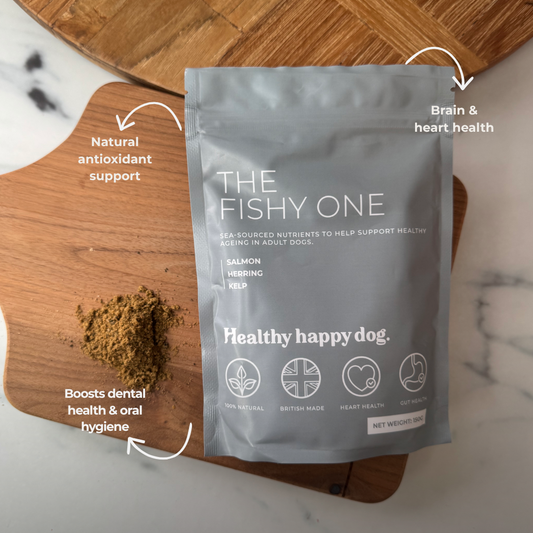
Our Fishy One contains salmon and herring, both natural sources of omega-3. It won’t stop your dog changing their coat with the seasons, but it can help support healthy skin and coat as part of their everyday diet.
When is shedding not normal?
Normal seasonal shedding should still leave your dog with healthy-looking skin and an even coat underneath. Bald patches, persistent scratching, redness, flaky or sore skin, or a sudden unexplained increase in hair loss can indicate something else is going on.
Parasites, allergies, skin conditions and some underlying illnesses can all cause abnormal hair loss, so it’s worth speaking to your vet if your dog’s shedding looks or feels different from normal.
For everyone else, spring and autumn mostly mean reaching for the brush a little more often and accepting that, for a few weeks at least, dog hair is going to be part of the décor.